How to draw for kids
Easy drawings for kids 4 to 8, one step at a time: a turkey, a snowman, a cat and a dinosaur. Each one is built from shapes your child already knows, with an easier version for little ones and ideas to make it their own. Below: which one to start with, the shapes that come first, and how to draw together.
Pick a drawing
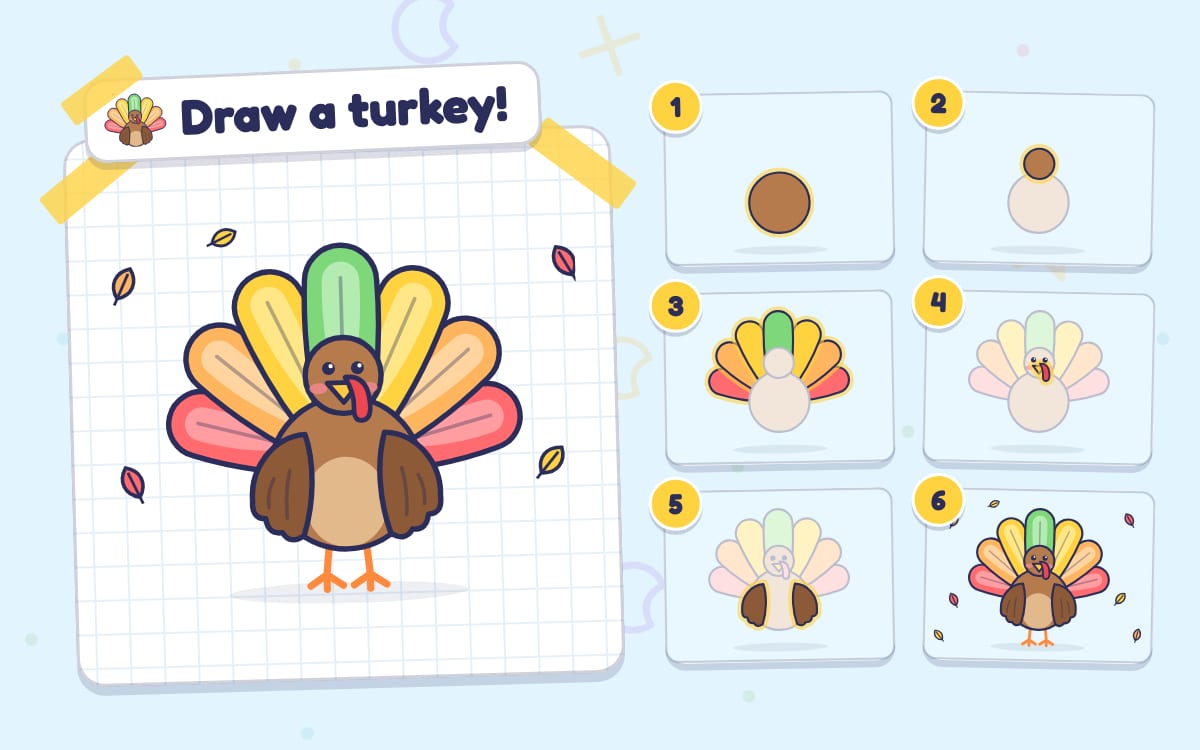
How to draw a turkey for kids, step by step
Draw a turkey in six easy steps, from a round body to a fan of feathers, plus a hand turkey for little ones, a thankful turkey and a turkey in disguise.Guide · 9 min read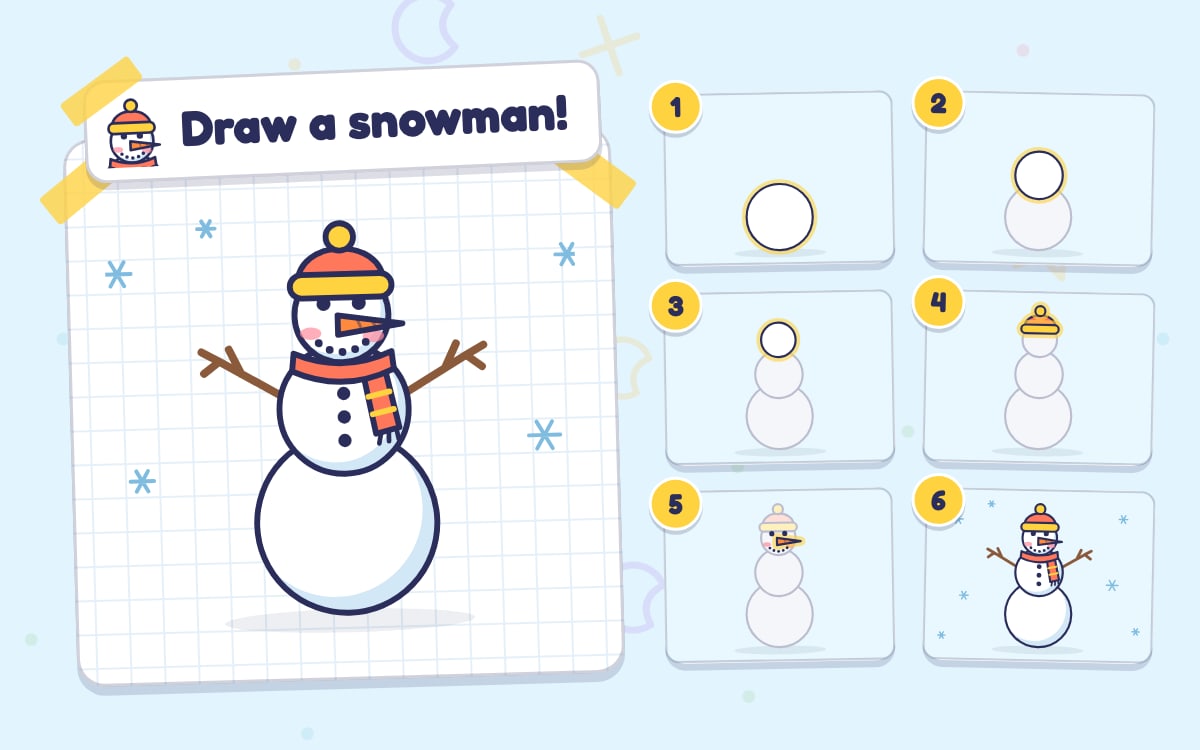
How to draw a snowman for kids, step by step
Draw a snowman in six easy steps, from three snowballs to a hat, a carrot nose and a scarf, plus a snowman family, a melting snowman and snowflakes.Guide · 6 min read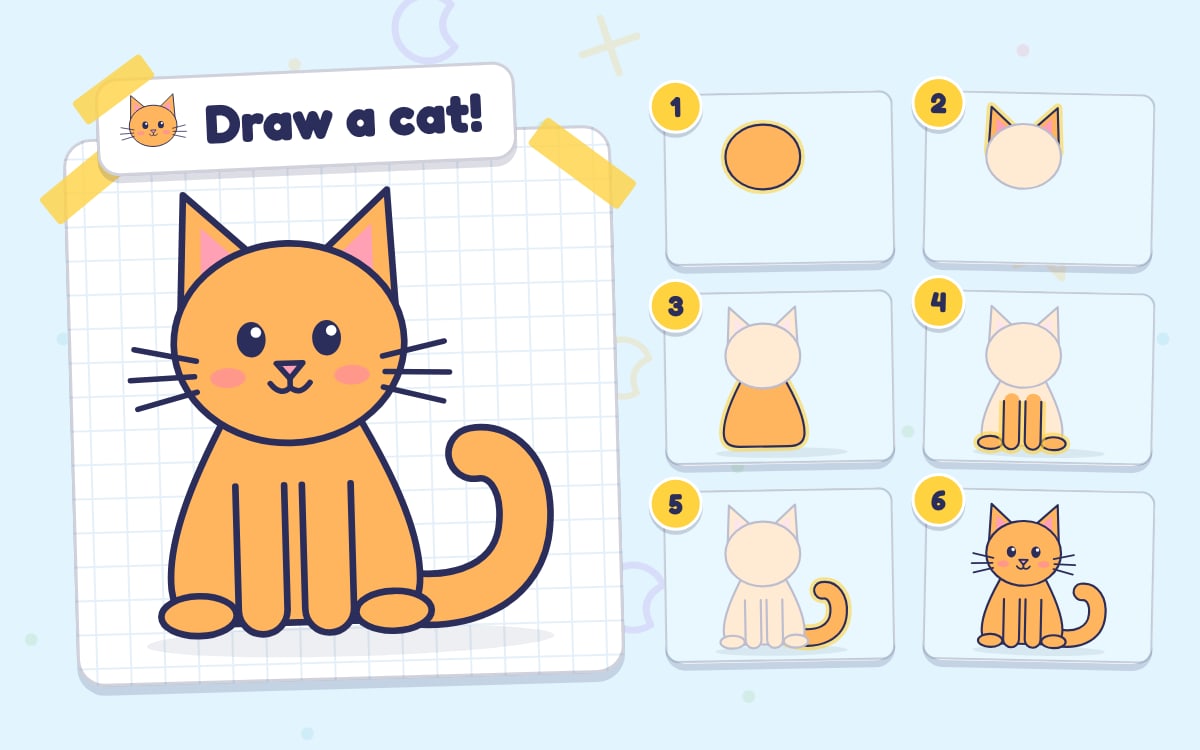
How to draw a cat for kids, step by step
Draw a cute cat in six easy steps, from a circle head to whiskers and a curly tail, plus a cat face for little ones and four real coats to try.Guide · 7 min read
How to draw a dinosaur for kids, step by step
Draw a friendly dinosaur like Doodle in six simple steps, from a big oval to a smiling face, with tips for little hands and ideas to make it their own.Guide · 5 min read


Which one first?
Start with the drawing whose shapes your child can already make. Here they are from the fewest kinds of shapes to the most, each with the easiest way in.
A snowman
Shapes: Three circles, a dome for the hat and a thin triangle for the nose.
Easiest start: Trace the three circles from a mug, a jar lid and a bottle cap, then add the face.
A turkey
Shapes: Two circles, upside-down U shapes for the feathers and a small triangle for the beak.
Easiest start: A hand turkey: trace your child’s hand, and the thumb becomes the head.
A cat
Shapes: A circle, two triangles, a bell shape and long U shapes for the legs.
Easiest start: Just the face: a circle, two ears, then eyes and whiskers.
A dinosaur
Shapes: An oval, a circle, triangles for the spikes and rounded rectangles for the legs.
Easiest start: Share it: you draw the oval and the circle, and your child adds the rest.
Shapes come first
Every drawing here is built from a handful of shapes, and children tend to learn those shapes in the same order. These are typical ages for copying each one, from a table by Somerset NHS Foundation Trust’s children’s therapy service. Children vary by months either way.
- Line downabout 2
- Line acrossabout 3
- Circleabout 3
- Crossabout 4
- Squareabout 4½
- Xabout 5
- Triangleabout 5¼
- Diamondabout 8
A circle that doesn’t quite close, or a triangle with round corners, is part of getting there. If the ears or the beak come out round, the drawing still works.
Drawing together
- Draw side by side. Each of you gets your own paper. You draw one step, then your child draws it. The same NHS team notes that children first learn a shape by watching a grown-up draw it, then trying it themselves.
- One step, a few words. “Big circle. Small circle on top.” A short name for each step is easier to remember than a long instruction.
- Start big, in the middle. The first shape decides how much room is left, so a body the size of a hand leaves space for feathers, tails and hats.
- Pencil first, color last. Light pencil lines are easy to draw over. Go over the lines worth keeping with a crayon or marker at the end.
- Leave their page to them. Help when you’re asked, and resist fixing a line. PBS KIDS for Parents suggests waiting to be invited in.
- Ask about it. The same article suggests “Tell me about…” rather than “What is that?”, and noticing something specific instead of a quick “That’s great.”
- Stop while it’s fun. Three steps today and three tomorrow still make a turkey.
- Keep a folder. Date each drawing. Comparing this month’s cat with one from last spring shows your child how far they’ve come.
Then color it in
Guides for the coloring half: how color by number works, and playful ways to learn the colors themselves.
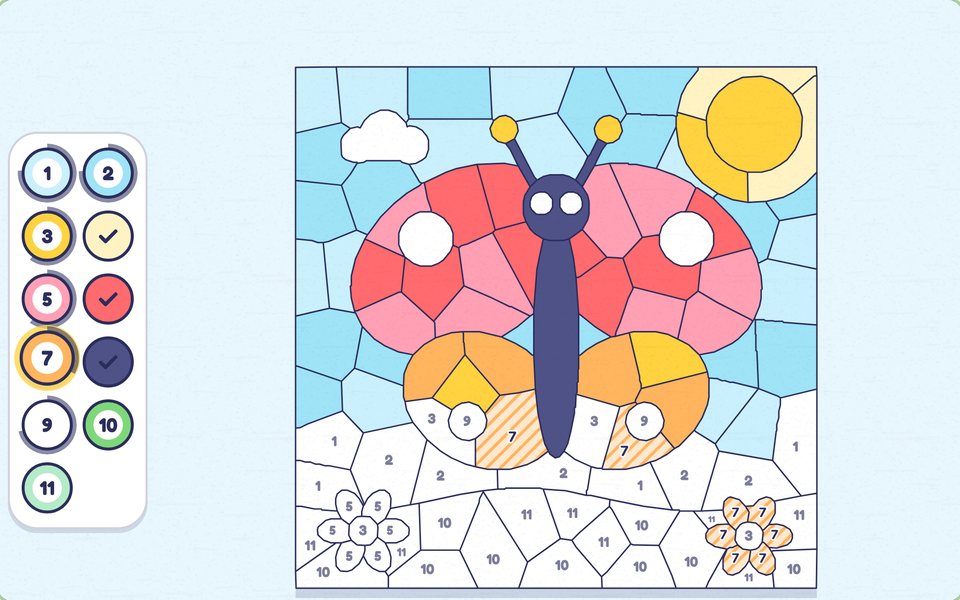
Color by number for kids: how it works, tips and free pictures to print
Color by number tips for kids 4 to 8: how it works, which size suits them, what makes it easier, and nine free pictures to color online or print.Guide · 5 min readLearning colors with kids 4 to 6: playful ideas at home
Everyday color games for kids 4 to 6, from color hunts and sorting to mixing paint and naming shades, plus free color by number to play or print.Guide · 5 min read

Draw, print and play
- Dot to dots that match. The cat, the dinosaur and the pumpkin dot to dots each link back to a drawing here. Join the dots first, then draw one freehand.
- A maze for the snowman. The snow maze prints in three sizes, each with its answer.
- Color by number. Pictures to color by matching numbers to colors, on screen or on paper.
- On iPhone and iPad. In the Little Paper app, Art studio redraws your child’s picture stroke by stroke, and in Mirror magic one half of the page draws itself to match the other. Both are always free.
Little Paper for iPhone and iPad
Drawing, coloring and puzzle games for kids 4 to 8, with Doodle. No ads and no data collected.
See the app’s gamesComing soon to theApp Store